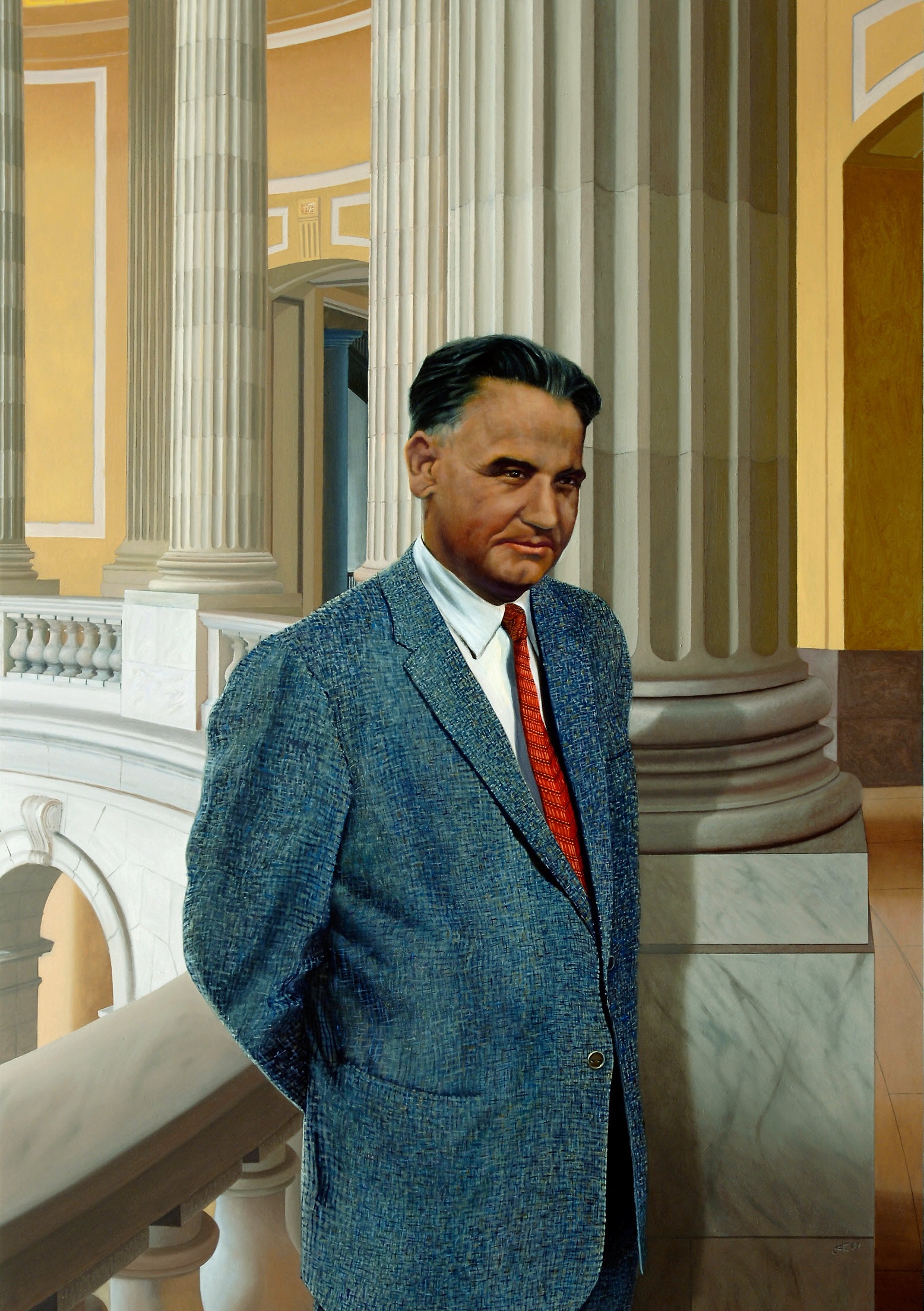
Dalip Singh Saund: Pioneer of the American Dream
Introduction
Dalip Singh Saund, often remembered as "Judge Saund," stands as a towering figure in American history, embodying the immigrant's unyielding pursuit of opportunity against formidable odds. Born in the rural heartland of British India, Saund became the first Asian American, Indian American, and Sikh elected to the United States Congress, serving as a Democratic Representative from California from 1957 to 1963. His journey from a small Punjabi village to the halls of power in Washington, D.C., is not merely a personal triumph but a testament to the evolving landscape of American democracy. In an era marked by racial exclusion and anti-immigrant sentiment, Saund's election shattered barriers, paving the way for future generations of South Asian and minority representatives.
Saund's significance extends beyond his electoral milestone. As a farmer, scholar, judge, and advocate, he navigated the complexities of identity, citizenship, and civil rights in mid-20th-century America. He lobbied tirelessly for Indian immigrants' naturalization rights, contributed to foreign policy discussions on Asia, and championed civil rights legislation. His story intersects with broader historical currents: the Indian independence movement, World War II-era immigration reforms, and the Civil Rights Movement. Yet, Saund's path was fraught with discrimination, health challenges, and political setbacks, culminating in a legacy that underscores resilience and the power of civic engagement.
Early Life and Education in India
Dalip Singh Saund was born on September 20, 1899, in the village of Chhajulwadi (also spelled Chhajjalwaddi), a modest agrarian settlement in the Punjab Province of British India, now part of modern-day India. His parents, Natha Singh and Jeoni Kaur, were devout Sikhs from a joint family that emphasized hard work and education. Natha Singh worked as a construction contractor for the British colonial government, amassing enough wealth to fund schooling for his children despite the family's rural roots. Tragically, Saund's father died when he was just ten years old, leaving a profound mark on the young boy. This early loss instilled in Saund a sense of responsibility; he helped support his family while pursuing studies, often walking miles to school.
Saund's education began in a one-room schoolhouse in his village, funded by his father and uncles, reflecting the family's commitment to learning in a region where access was limited for rural Sikhs. He excelled academically and was sent to boarding schools in Amritsar, including the prestigious Prince of Wales Royal Indian Military College (though he did not pursue a military path). His intellectual curiosity led him to the University of the Punjab in Lahore, where he enrolled in 1916. Saund graduated in 1919 with a Bachelor of Science degree in mathematics, a field that honed his analytical skills and discipline.
During his university years, Saund became deeply involved in the burgeoning Indian independence movement. Inspired by Mahatma Gandhi's nonviolent resistance, he participated in protests against British rule, including the Non-Cooperation Movement of 1920–1922. Saund later recalled in his writings how these experiences shaped his worldview: "The fire of nationalism burned brightly in my heart." He organized student rallies and distributed anti-colonial literature, activities that nearly derailed his academic plans. Despite the political turbulence, Saund's resolve to seek advanced education abroad remained firm. With financial support from his elder brother, Partap Singh, he set his sights on the United States, viewing it as a land of opportunity free from colonial oppression.
Saund's early life in Punjab was a crucible of cultural and national identity. As a Sikh, he grew up in a community that valued equality, service (seva), and resilience—principles from the Sikh Gurus that would later inform his American endeavors. The Punjab of his youth was a fertile but contested region, divided by British policies that favored certain groups while marginalizing others. Saund's exposure to these inequities fueled his passion for justice, a theme that would recur throughout his life. By 1919, as India simmered with calls for self-rule, Saund departed for America, leaving behind a homeland on the cusp of transformation.
Immigration to the United States and Early Struggles
Saund arrived in the United States on September 27, 1920, aboard the steamship Korea Maru, docking in San Francisco. His initial goal was to study agriculture and food preservation at the University of California, Berkeley, drawn by America's reputation for innovation in farming techniques. However, upon arrival, he encountered the harsh realities of anti-Asian immigration policies. The Immigration Act of 1917 had barred most Asians from entry, but Saund entered as a student, a narrow exemption. He quickly shifted his focus to mathematics, earning a Master of Arts in 1922 and a Ph.D. in 1924—becoming one of the first Indians to achieve such academic honors in the U.S.
Life as an immigrant was grueling. Saund worked odd jobs in canning factories and farms to fund his studies, enduring racial slurs and exploitation. The 1923 Supreme Court case United States v. Bhagat Singh Thind ruled that South Asians were not eligible for naturalized citizenship, deeming them outside the "white" category—a decision that barred Saund from owning land or fully integrating. Undeterred, he moved to the Imperial Valley in Southern California in 1925, a booming agricultural region. There, he farmed lettuce and other crops, leasing land under a white friend's name to circumvent discriminatory laws. Saund innovated by introducing Punjab flax and other hardy varieties, boosting local yields and earning respect from fellow farmers.
In 1928, Saund married Marian Z. Kosa, a woman of Mexican-American and Swiss descent, in a union that bridged cultures. They settled in Westmorland, raising three children: Dalip Jr., Julie, and Ellie. Marian provided steadfast support, managing the household while Saund built his career. The couple's family life contrasted sharply with the isolation many immigrants faced; Saund founded a small Sikh community near Stockton, California, contributing to the establishment of the Stockton Gurdwara in 1912, one of the oldest in the U.S.
Saund's activism intensified in the 1930s and 1940s. He co-founded the India Association of America in 1942 to advocate for Indian independence and U.S. citizenship rights. His 1930 book, My Mother India, was a direct rebuttal to Katherine Mayo's derogatory Mother India (1927), which portrayed India as backward. Saund's work countered stereotypes, emphasizing India's cultural richness and the humanity of its people. During World War II, with India allied against Japan, Saund lobbied Congress for immigration reform. His efforts culminated in the Luce-Celler Act of 1946, which granted naturalization eligibility to Indians and Filipinos. On December 16, 1949, Saund finally became a U.S. citizen, a milestone he celebrated as "the proudest day of my life."
These years of struggle forged Saund's American identity. He embraced the democratic ideals of the U.S. while retaining his Sikh heritage, wearing a turban in public—a bold statement amid widespread prejudice. His immigration story mirrors that of countless others: perseverance amid exclusion, transforming barriers into bridges for future opportunities.
Professional Career and Local Leadership
After obtaining citizenship, Saund transitioned from farming to public service. From 1930 to 1953, he was a successful lettuce farmer in the Imperial Valley, later distributing chemical fertilizers starting in 1953. His agricultural expertise made him a community pillar; he advised on irrigation and crop rotation, vital in the arid region dependent on the Colorado River. Saund's Ph.D. in mathematics also led to occasional lecturing, but his passion lay in justice and politics.
In 1950, Saund was elected to the Imperial County Democratic Central Committee, rising to chairman by 1954. He served as a delegate to Democratic National Conventions in 1952, 1956, and 1960, aligning with Franklin D. Roosevelt's New Deal legacy. His first elective office came in 1952 when he ran for Justice of the Peace in Westmorland Judicial District. Though initially disqualified for insufficient citizenship tenure, he won on a write-in campaign by 13 votes, serving until 1957. As "Judge Saund," he earned a reputation for fairness, handling cases with strict but equitable sentencing. He claimed to be the first native Indian in an elected U.S. office, a point of immense pride.
Saund's judicial role involved minor civil and criminal matters, but it showcased his legal acumen and commitment to due process. He combated local crime, including smuggling along the U.S.-Mexico border, while advocating for farmworkers' rights. His tenure highlighted his ability to transcend ethnicity; voters appreciated his integrity over prejudice. By the mid-1950s, Saund had become a local leader, blending professional success with civic duty, setting the stage for national ambitions.
Rise to National Politics
Saund's congressional bid began in 1956, challenging the incumbent Republican in California's 29th District, encompassing Imperial and Riverside counties. The district's diverse electorate—farmers, veterans, and minorities—aligned with Saund's platform of water rights, agriculture, and civil rights. He secured the Democratic nomination amid controversy; opponent Jacqueline Cochran, a famed aviator, challenged his eligibility, citing his foreign birth. Saund prevailed, famously stating, "I am an American citizen, and I have as much right to run for Congress as anyone else."
In the general election, Saund defeated Cochran by over 10,000 votes, becoming the first Asian American with full voting rights in Congress. His campaign emphasized practical issues: securing federal aid for flood control and irrigation. As a Sikh, Saund faced Islamophobia-tinged attacks post-Suez Crisis, but his message of unity resonated. He served three terms, winning in 1958 against John Babbage and in 1960 against Charles H. Jameson.
Saund's elections were trailblazing. In 1957, he took the oath of office, turban and all, symbolizing inclusion. Delegates to the Democratic conventions amplified his voice, positioning him as a bridge between America and Asia.
Congressional Service and Achievements
Saund's tenure in the 85th to 87th Congresses (1957–1963) was marked by influential committee work and policy advocacy. Appointed to the House Committee on Foreign Affairs—a rarity for a freshman—he critiqued U.S. Middle East policy, warning in 1957: "Buying kings and protecting oil" echoed British errors in India, risking expulsion. He praised Eisenhower's Suez Crisis stance and urged equitable treatment for Asian leaders.
In 1957, Saund joined a Foreign Affairs Committee tour of Asia, meeting Jawaharlal Nehru, Sukarno, and David Ben-Gurion. He defended U.S. civil rights actions during the Little Rock desegregation, countering communist propaganda. Saund also chaired the U.S.-Mexico Interparliamentary Group's border affairs subcommittee, addressing immigration and trade.
Domestically, on the Interior and Insular Affairs Committee, Saund secured funding for military bases, post offices, roads, and airport improvements in his district. He protected the Bracero Program for Mexican farm laborers while pushing reforms and negotiated land deals for Palm Springs and the Agua Caliente Band of Cahuilla Indians. Saund introduced a bill safeguarding the date industry from foreign competition, passing the House but stalling in the Senate. He voted for the Civil Rights Acts of 1957 and 1960, drawing on his immigrant experience: "I know what it means to be denied rights."
Saund's Sikh identity amplified his role in U.S.-India relations. He lobbied for aid to India during the 1962 Sino-Indian War and promoted cultural exchanges. His Congressman from India detailed these efforts, blending memoir with policy insights.
Tragedy struck on May 1, 1962, when Saund suffered a severe stroke during his reelection campaign, hospitalizing him for months. He lost to Patrick M. Martin but made a partial recovery, advocating from recovery.
Later Life, Death, and Legacy
Post-Congress, Saund focused on recovery, moving between San Diego and Los Angeles facilities. He remained active in Democratic circles and wrote his autobiography. A second stroke on April 22, 1973, claimed his life at age 73 in Hollywood, California. Cremated per Sikh tradition, his funeral drew tributes from 24 House members, who hailed him as a "pioneer."
Saund's legacy endures. He opened doors for Asian Americans; today, over 20 Indian Americans serve in Congress. His advocacy for citizenship and civil rights influenced the Immigration and Nationality Act of 1965. Institutions like the University of California, Santa Barbara, house his papers, preserving his story. As his great-grandnephew Daleep Singh notes, Saund exemplified the American Dream: "From farmer to Congressman, he showed what's possible."
Saund's life challenges stereotypes of immigrants as passive, proving active citizenship transforms nations.
Conclusion
Dalip Singh Saund's odyssey from Punjab's fields to Capitol Hill encapsulates the immigrant ethos. Overcoming colonialism, racism, and health woes, he enriched American democracy. His story reminds us that progress demands perseverance, inspiring ongoing fights for equity. In an increasingly diverse America, Saund's legacy affirms: inclusion strengthens the union.